
How La Habra Residents Are Found
A good search starts with the right key. Start with a street address. It points to a parcel, an assessor number, and a mapped legal description. A full name works differently. It can surface a deed party, a court index entry, a license, a business filing, or a historical directory listing. A year from a photograph or obituary can unlock an archive search.
Orange County records reward a search that narrows. A broad lead should end at a dated record. Ownership is not occupancy. A court party is not automatically a resident, a directory entry is only a snapshot, and voter records carry legal limits of their own. Good resident lookup practice keeps the source, date, address type, and level of certainty beside every result.
- Start with the Orange County property search by street number and street name, then save the APN, situs address, and legal description when the record supplies them.
- Use the parcel in OC Public Works GIS to check the lot, tract, adjoining parcels, annexation context, and any associated survey or map.
- Search the Clerk-Recorder Grantor/Grantee Index by the exact party spelling and a recording-date range, remembering that an index result is not the deed image.
- For a person, compare a court, license, business, unclaimed-property, or historical-directory lead with a second independent record.
- When a city file is identifiable but not online, make a narrow California Public Records Act request with the department, address or APN, date range, and desired format.
La Habra Records Offices by Question
La Habra residents land in different record systems because each custodian serves a different purpose. The Clerk-Recorder holds recorded land instruments and vital copies. The Assessor and Tax Collector tie parcels to assessment and tax facts. Voter information sits with the Registrar of Voters. City Hall keeps local administrative files. The Superior Court holds case records, so picking the office before entering the name makes any directory search clearer.
Orange County Clerk-Recorder
601 N. Ross Street
Santa Ana, CA 92701
714-834-2500
Orange County Assessor
Parcel, assessment, and tax search
Street or APN entry is the practical starting key.
Orange County Registrar of Voters
1300 S. Grand Avenue, Building C
Santa Ana, CA 92705
Qualified-file rules apply.
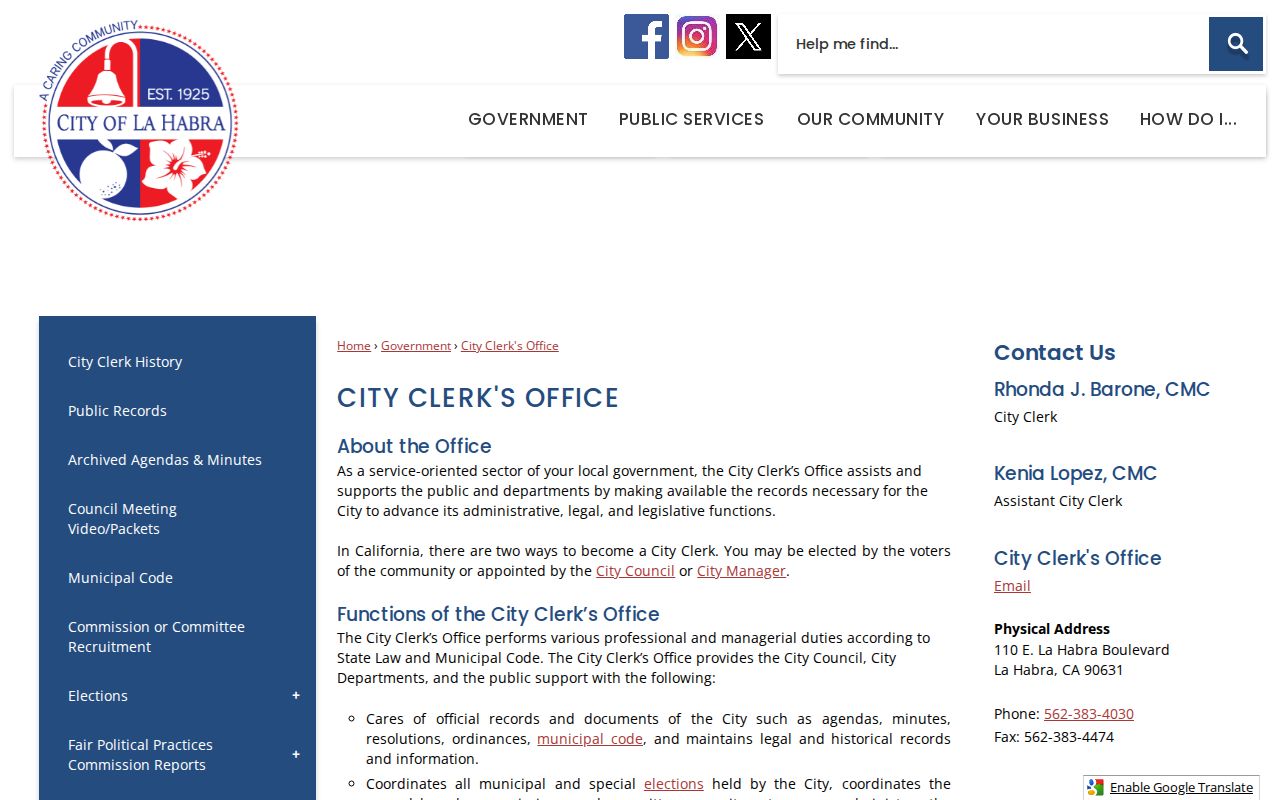
The La Habra City Clerk is the local door for agendas, minutes, ordinances, resolutions, contracts, claims, campaign filings, and historic city records. Those files can name a speaker, applicant, vendor, or public official. They are not a household roll.
The City Clerk page lists contact details and hours. A county index cannot answer every city question. The city cannot certify a county deed either. Send each record request to the custodian that created or holds the record.
The office sits at 110 E. La Habra Boulevard. The phone number is 562-383-4030. Counter hours run Monday through Thursday, 7:30 a.m. to 6 p.m., and the office closes Friday.
The official City Clerk source pairs with the image below and helps separate municipal participation records from a general resident list.
City records add names and dates to a parcel. They still call for a clear reason for the search and careful handling of restricted details.
La Habra Resident Records Start Here
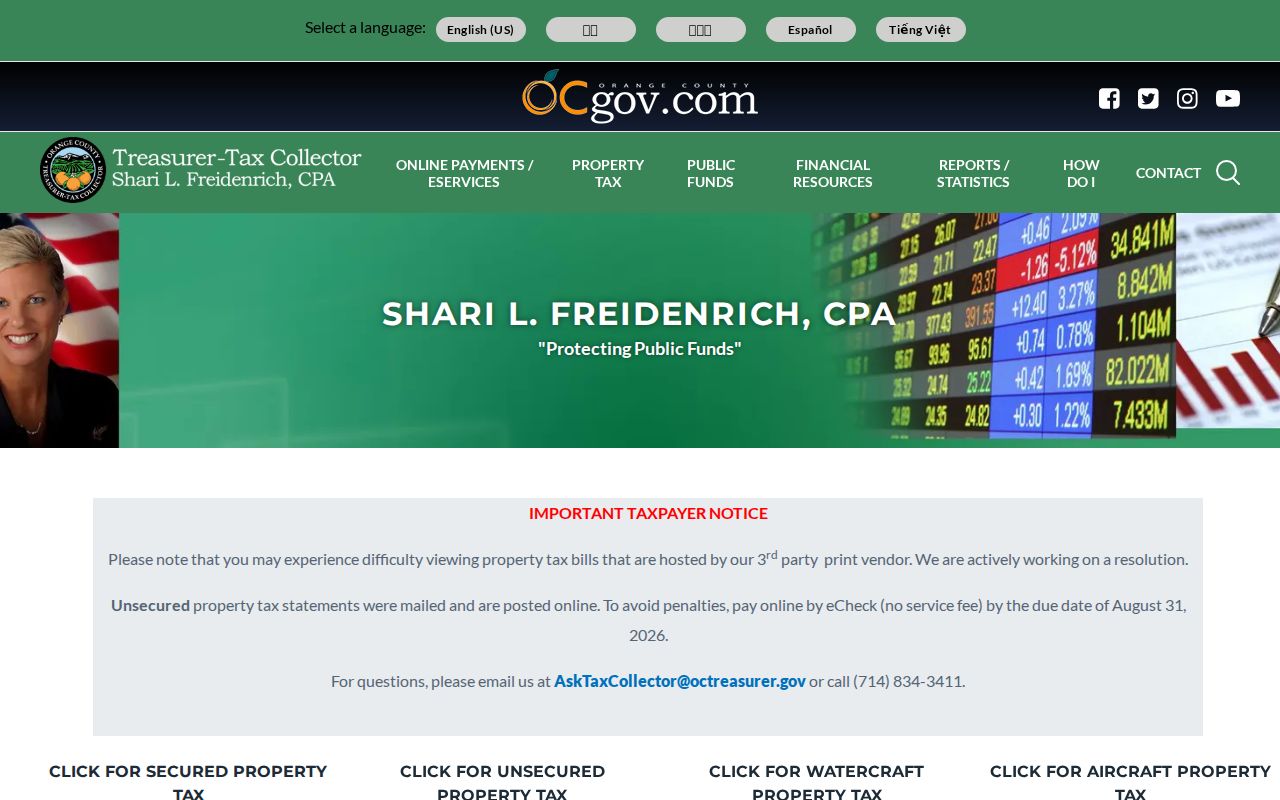
The Orange County secured-property search is built around parcels and addresses. It establishes the APN, situs, assessment context, and property characteristics that sharpen every later records search. The public interface offers no owner-name search. Start with the address or parcel number. A surname search will not find every local owner.
APN stands for assessor's parcel number. Situs is the physical location of the parcel. A mailing address is where tax and assessment notices go, and it may belong to an owner, trust, representative, or somewhere else entirely. When mailing and situs addresses match, an owner-occupancy lead gains support, though it still does not prove who lives there.
| APN / parcel number | Text key; preserve leading zeros and hyphens as the interface directs. |
|---|---|
| Street number | Address-mode numeric field; enter the exact number first. |
| Street name | Address-mode text field; try the name without a suffix or direction if needed. |
| Search / Reset | Controls for submitting or clearing a parcel query; results are parcel records, not household rolls. |
A parcel record can hold plenty: APN, situs address, owner name where law and interface permit, tax mailing address, legal description, and tract-lot data. It may also list assessed land and improvement values, the tax rate area, use code, exemptions, year built or characteristics, and a map link. Phone numbers and household members are not assessment-roll fields.
The Orange County secured-property search is the source for the image below. Its address-first design makes the APN worth saving. Keep it handy for deed work. Neighboring parcel searches also start from that same saved number.
For a street question, carry the APN into GIS. For a person question, treat the owner name as one anchor and go find a second dated record.
La Habra Deed Records Build Trails
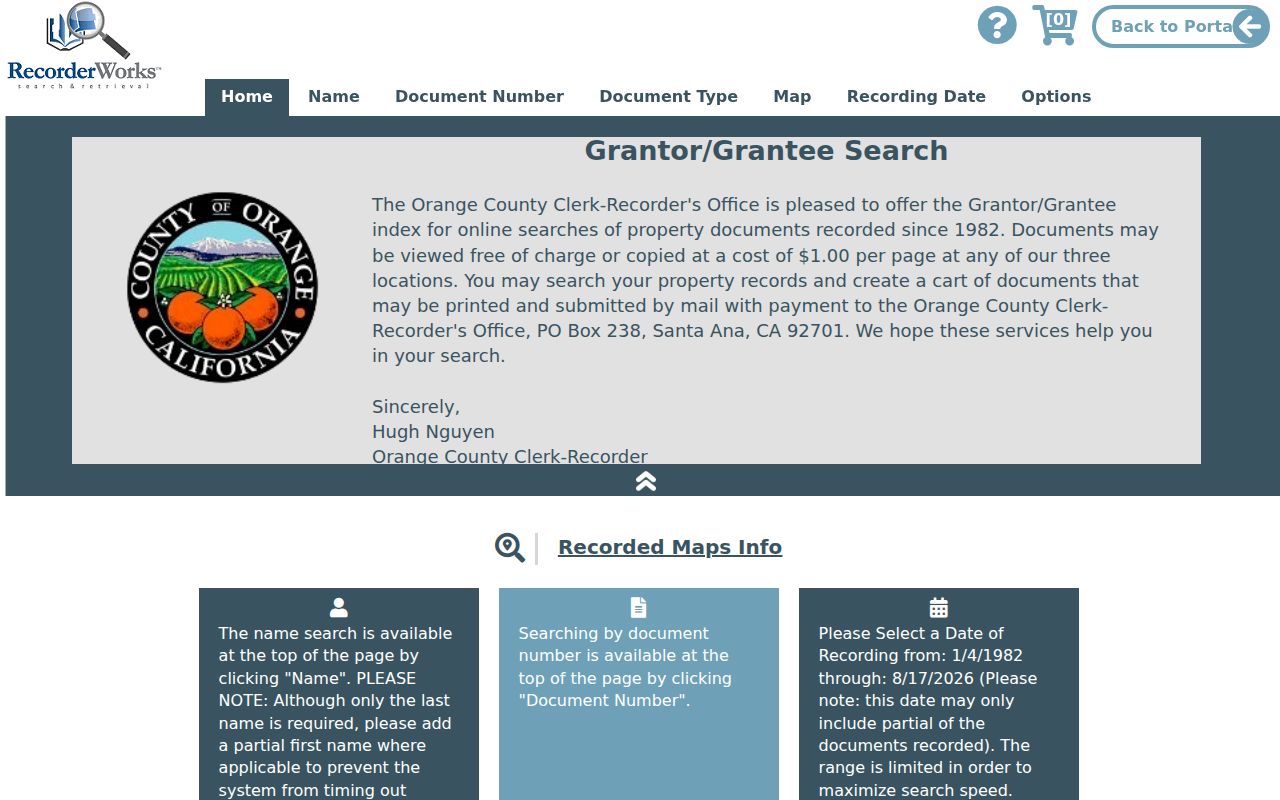
The Orange County Grantor/Grantee Index is a name-and-date index to recorded instruments. A grantor transfers an interest. A grantee receives it. The index exposes party names, recording dates, document type, and document or instrument identifiers. The full recorded image does not appear on screen. Legal descriptions, vesting language, signatures, and return addresses live inside the instrument itself.
RecorderWorks adds Search by Name for a person or business, partial matching, recording-date fields, Book/Page, Document Type, Index Books, predefined searches, APN, and Legal Description modes. Its online dividing line is January 4, 1982. Earlier records call for book, page, and instrument references. The recorder and the Orange County Archives can supply index books, microfiche, or copies.
| Index result field | What it contributes | What it does not prove |
|---|---|---|
| Indexed party and role | Names the grantor or grantee as indexed. | That the party lived at the parcel. |
| Recording date | Places the filing in a county record timeline. | The exact sale or move date. |
| Document type and number | Identifies a deed, lien, release, reconveyance, map, or related instrument. | The instrument's full legal terms. |
| Book, page, or APN reference | Helps retrieve older or parcel-linked material. | A current household list or image access. |
Search every spelling variant and bound the recording dates. A chain starts with the present parcel. Find the acquisition instrument, note the seller, then hunt that seller as an earlier grantee. Recorder staff will point patrons to the indexes but will not run the name search by phone, mail, or at the counter. That work stays with you.
The free index is not a copy. Orange County charges $1 per page, plus $1 to certify each document or map. Mail your request to the Clerk-Recorder at 601 N. Ross Street, Santa Ana, and include a document number with a self-addressed stamped envelope. The county's property-fraud notice also urges periodic index review and offers a free automatic courtesy notice whenever a title-affecting filing hits the index. The Grantor/Grantee Index supplies the image below. It makes a fine resident trail because it preserves names tied to a property event, while its limits keep the result from being mistaken for a complete residents directory.
Check the source link itself, not just a surname, whenever a La Habra deed trail needs copying or verifying.
Current La Habra Resident Records
Working from current records in La Habra means piecing together partial views. Each row of the residents directory answers a slightly different question. No single row proves that every household appears. Treat them as fragments. The strongest lookup ties an address key, an identity key, and a date together. That comes before any conclusion about who lives where.
| Record source | Who or what appears | Keeper | Access level |
|---|---|---|---|
| Assessment and tax parcel | Parcel, APN, situs, assessment facts, and owner or mailing data where displayed | Orange County Assessor / Tax Collector | Official parcel search and counter channels |
| Recorded instrument index | Parties to deeds, liens, releases, reconveyances, and maps | Orange County Clerk-Recorder | Free index; image or copy is separate |
| Voter status | One voter's registration and election information | California Secretary of State | Self lookup; qualified file rules |
| City administrative file | Applicants, owners, contractors, speakers, or project contacts where disclosable | City of La Habra | Archive search or narrow records request |
| Historical directory or census | Listed occupants or households in a stated year | Libraries, archives, NARA, and partners | Collection-specific and incomplete |
Ask a better question and a name search gets stronger. Instead of asking whether a record names the right person, ask what role the record plays. A parcel owner shows title. A residents directory subscriber shows a listing. A court party shows a tie to a case. Keep those roles separate. When a La Habra name needs modern confirmation, the La Habra resident lookup workflow keeps each source role straight while it narrows the field.
La Habra City Records Add Clues
City Hall records can fill gaps that county portals leave open. La Habra planning and building files often name an applicant, an owner, an architect, or a contractor. The names tie to a project address. They can also describe construction work or a change of use. Code Enforcement deals with property and land-use complaints. Its public page works as a report channel. It is not an open index of names and cases. Police records sit behind role, privacy, and investigative rules.
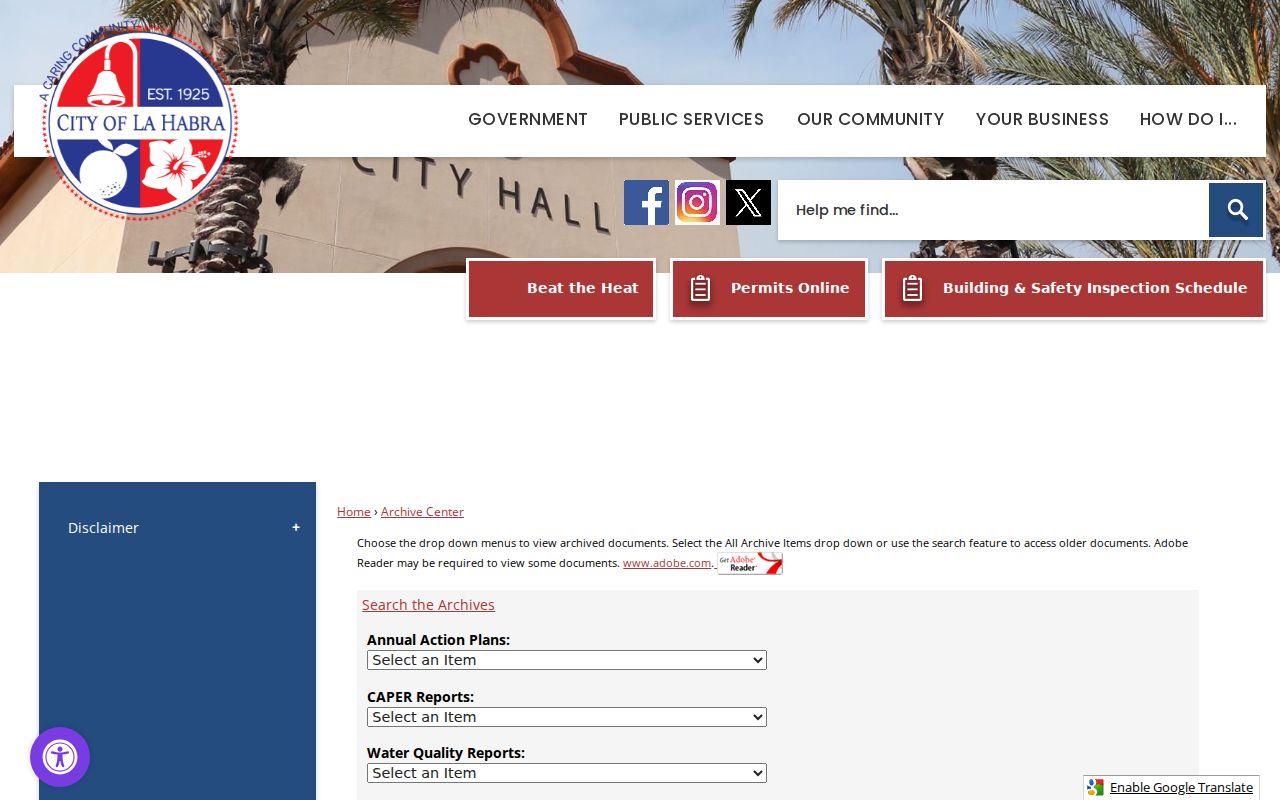
The free La Habra Archive Center offers Keywords, Archive, and Time Period fields. It also provides Date Range Start and Date Range End. Advanced Search adds a tool called Search Agendas by. Use it to pull budgets, water reports, action plans, and meeting material. Ordinances and resolutions also surface by subject and date. Keep one caution in mind. A file missing online does not mean the Clerk lacks it.
When the archive falls short, a narrow public-records request through City Hall is the fallback. State the department, the address or APN, and any project or case number. Add the date range and the electronic format wanted. The CPRA gives the city 10 calendar days for an initial determination. Unusual circumstances can trigger a written 14-day extension. That clock measures the response, not full production of every page.
The City Archive Center appears below. Its controls shine when a person shows up in a meeting record. They also help when a parcel turns up in a project file.
Ask to inspect when many pages are involved. When copies are what you need, request redacted, disclosable records rather than complainant details or material tied to an active investigation.
La Habra Ownership Records Need Care
La Habra property records are valuable because they tie a person or entity to a parcel. They are also easy to overread. A tax mailing address can sit somewhere else entirely, and a trust or representative may appear in place of the owner. Some people live in a home without holding title. They may never appear in the assessment roll. The situs address names land, not people. The same caution applies to a recorded deed. A recorded party holds a legal role in an instrument, whether that role is a transfer, lien, release, or reconveyance. That role is not proof the party occupied the home, and a residents directory built from official records should label each lead by its record type.
- Assessor parcel: a strong address and title anchor. It connects an owner or parcel fact to land, not a full household.
- Recorder index: a strong transaction anchor. It connects parties to a recorded event and date.
- Historical directory: a useful year snapshot. It connects a listed subscriber or occupant to a volume's stated coverage.
- Commercial people-search output: a lead only. It may merge names or retain stale data, so verify at the custodian.
Here is the main difference between an official records path and a commercial compilation. Official records expose the custodian, the search fields, the date, and the limits. A compilation may be faster. Its source mix and update trail can stay unclear. Personal research often benefits from the slower record path. Each fact can be checked.
La Habra Voter Records Stay Limited
California My Voter Status lets a voter verify their own registration, and it is not a public street directory. The current form asks for the facts it needs, which may include name, birth date, California identification details, county, or address facts. A match can show districts. It can also show registration status, party preference, polling or vote-center information, and ballot information. It will not show ballot choices. Orange County voter-registration data is different. It is not general public data. Elections Code section 2194 and 2 CCR sections 19001 through 19012 limit the purposes, applicants, security steps, and products available through a qualified request. The county requires a qualified individual or organization, a wet original signature, payment, supporting documentation, and a permitted-use description. A specific-voter request cannot be turned into that.
- Self lookup: verifies the requester's own status, districts, and election details through the state portal.
- Qualified file: requires an eligible purpose, application, signature, supporting material, payment, and storage controls.
- Protected fields: identification numbers, signature data, and Safe at Home addresses are not ordinary directory fields.
- Participation history: may indicate a voting event, never the selections made on a ballot.
The California My Voter Status portal lets a voter confirm personal registration details. A La Habra residents directory built from voter rolls would misread that purpose, since the lookup only speaks to the person who requests it.
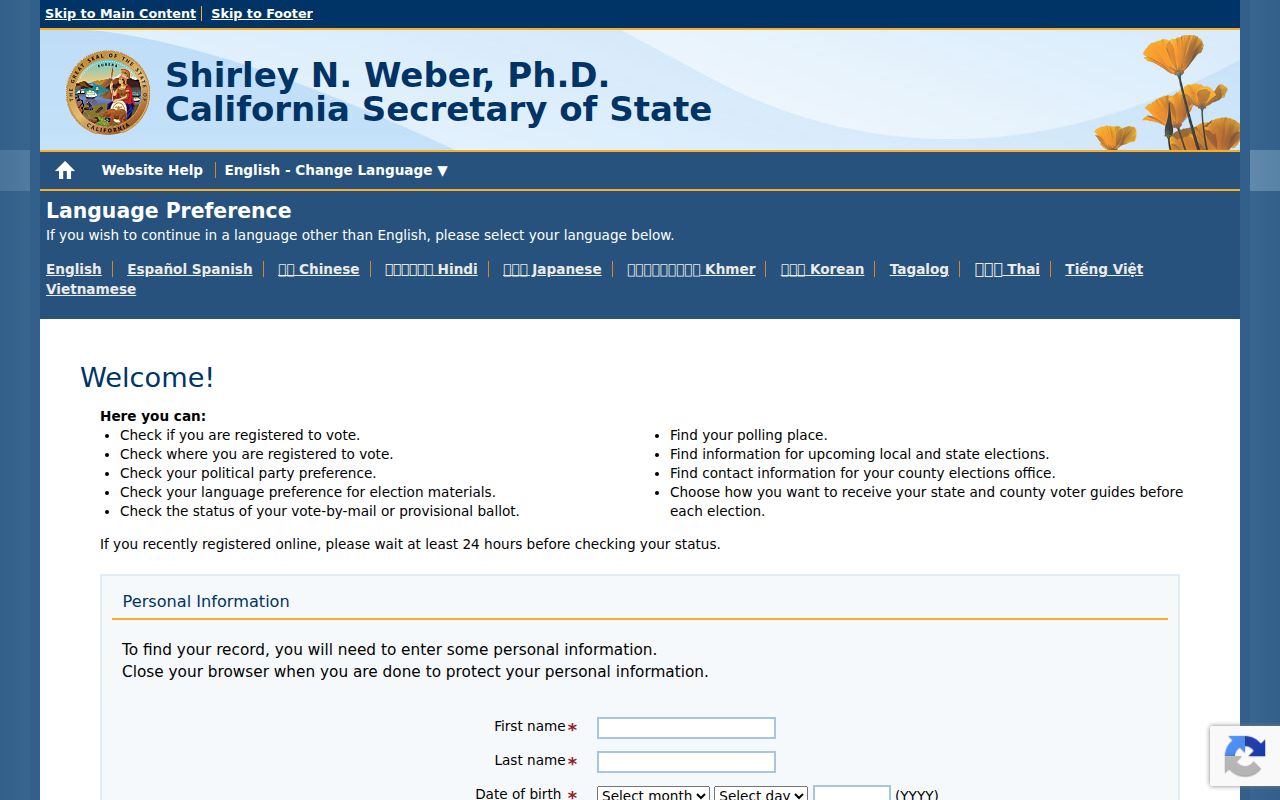
Election geography can clarify a district or a precinct. It never makes the names inside that geography public.
La Habra Names Need Two Matches
A same-name hit is only a candidate. Two independent facts must connect it. A middle initial can do that. So can a spouse, an associate, an age range, an address, an APN, a court venue, a business tie, or a date. Follow the role and wording each record gives. Resist merging different sources into one tidy story.
For a name-to-address search, pick the source that fits the question. That could be a professional license, a business filing, a court index, or a historic La Habra directory. Then weigh it against a parcel, a deed, or a dated city file. Keep the address type beside the date. A mailing address, a situs address, a legal description, and a directory address are not interchangeable.
- Roll
- A recurring list maintained for a defined purpose, such as assessment or registration. It is not automatically a household list.
- Index
- A finding aid that points to a record by name, date, number, or parcel. An index may omit the document image.
- Parcel
- A mapped unit of land tracked by an APN. The parcel is the geographic key behind many Orange County searches.
- Criss-cross directory
- A reverse arrangement that starts with a street and number rather than a person's name. Each volume's key must be checked.
La Habra Court Records Split the Trail
Court and vital records live in separate systems. The Orange County Superior Court Online Case Access portal works as a party and case index for matters touching La Habra. Search paths differ by category. Civil, criminal, family, and probate cases each take their own route, and name fields, case numbers, and filing-date ranges may appear alongside category notices that change the path. North Justice Center handles many northern Orange County matters. Lamoreaux Justice Center takes the family-law cases. Federal cases sit in PACER, outside the county index.
Vital records follow a different door. Orange County and the California Department of Public Health issue copies for county events, while divorce decrees come from the Superior Court. Health and Safety Code sections 103525 and 103526 draw the line between authorized certified copies and informational certified copies. An authorized copy can establish identity for an eligible applicant. An informational copy is marked otherwise. Mailed authorized requests generally need a notarized sworn statement.
No free modern statewide vital-name roll exists. Historical marriage and genealogy collections can reveal parties, parents, witnesses, residences, and event facts, but an image or index from those collections is not a certified copy. Match each court or vital lead to the question, then use the proper custodian and its application path.
Historical La Habra Directory Shelves
Historical searches change the La Habra residents directory game. NARA's circa-1930 holdings table lists multi-city Orange County directories that include La Habra for 1926 and 1929. Later catalog entries tuck La Habra inside GTE "Whittier and nearby cities" titles and Pacific Bell "Orange County North" address and phone portions. The border geography matters. A catalog search that uses only the city name may miss the shelf entirely.
The GTE runs span 1988 through 1993. Their issues carry January, May, and July dates. Pacific Bell holdings cover 1988 through 1994. One catalog row shows a plain "Jul 1888" typo sitting among the 1988 material, and it should stay a catalog slip rather than a claimed 1888 volume. Whittier white and yellow pages extend into 2003 through 2010, though subscriber and business listings never equal full household coverage.
La Habra Library is closed for building improvements. The roughly 24-month renovation began in May 2025, with a spring 2027 reopening planned. Interim options exist. Brea Library, mobile stops, OCPL reference service, the Orange County Archives, NARA, and the Orange County FamilySearch Center all work while the branch is shut. Call before you travel. Local shelf access keeps shifting during the closure.
The Orange County Archives holds the archival view. It shines for pre-1960 directories, newspapers, photographs, property series, and county government material.
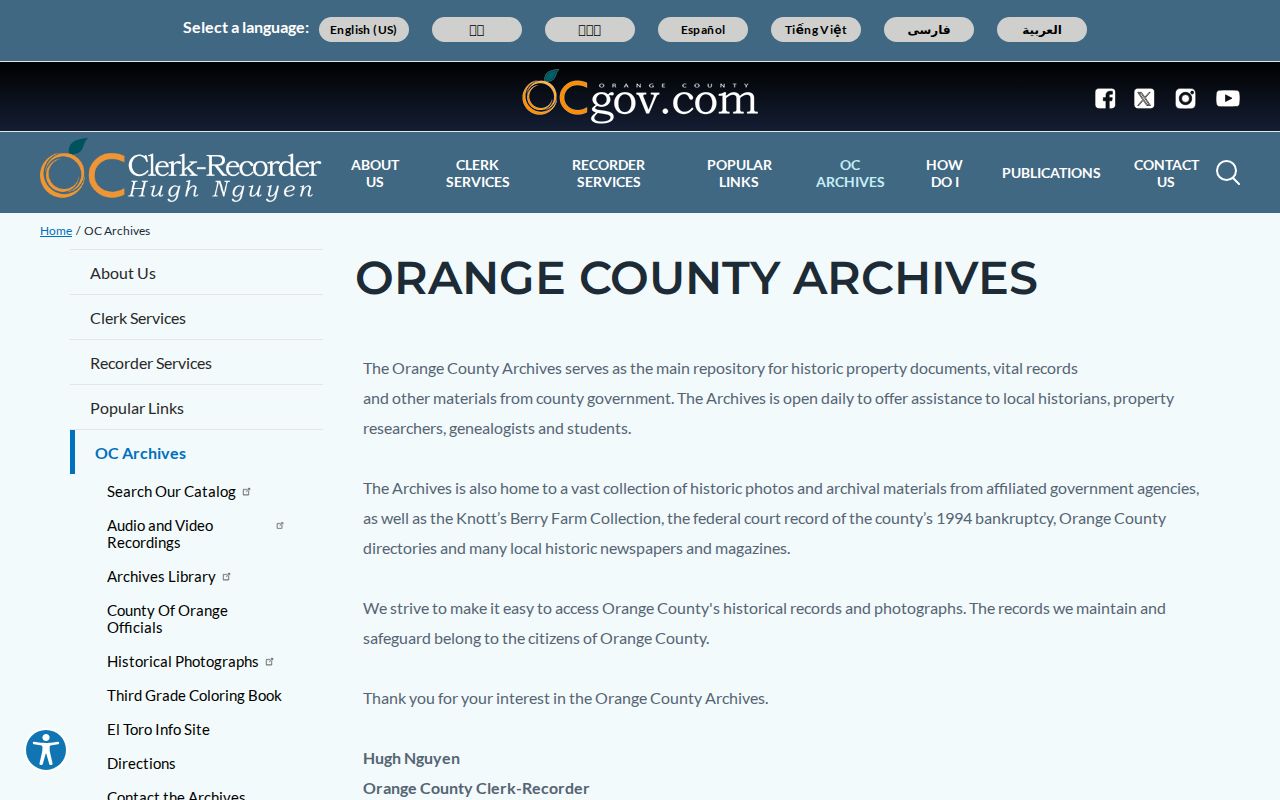
Not every old volume has a reverse section. For exact year runs and how entries are arranged, use the La Habra city directory collections reference.
La Habra's Records Have a 1982 Divide
Orange County records run deeper than the modern web interface. The Clerk-Recorder preserved 640 original property-deed volumes covering 1889 through 1926. Add 210 property-index volumes spanning 1889 through 1953. That paper survives through deacidification, Mylar sleeving, fireproof rebinding, and microfilm work, which is why an archive or counter request can succeed after an online search stalls.
RecorderWorks draws its online line at January 4, 1982. Earlier material may need book, page, instrument, index-book, or microfiche references. The county opened its Orange County Archives in 1983. It preserves over a century of material. The recorder stays custodian of official recorded instruments. Archives, meanwhile, supplies the older maps, assessments, and administrative series that fill the gaps.
Municipal history has its own boundary. La Habra incorporated on January 20, 1925. Anything earlier cannot be a City of La Habra record, so county, land-grant, church, newspaper, and federal sources carry the pre-city story. Keep that line in mind. An old name or address may belong to a different jurisdiction entirely.
The City Hall public-records hub connects municipal services, the request route, budgets, forms, and the city archive.
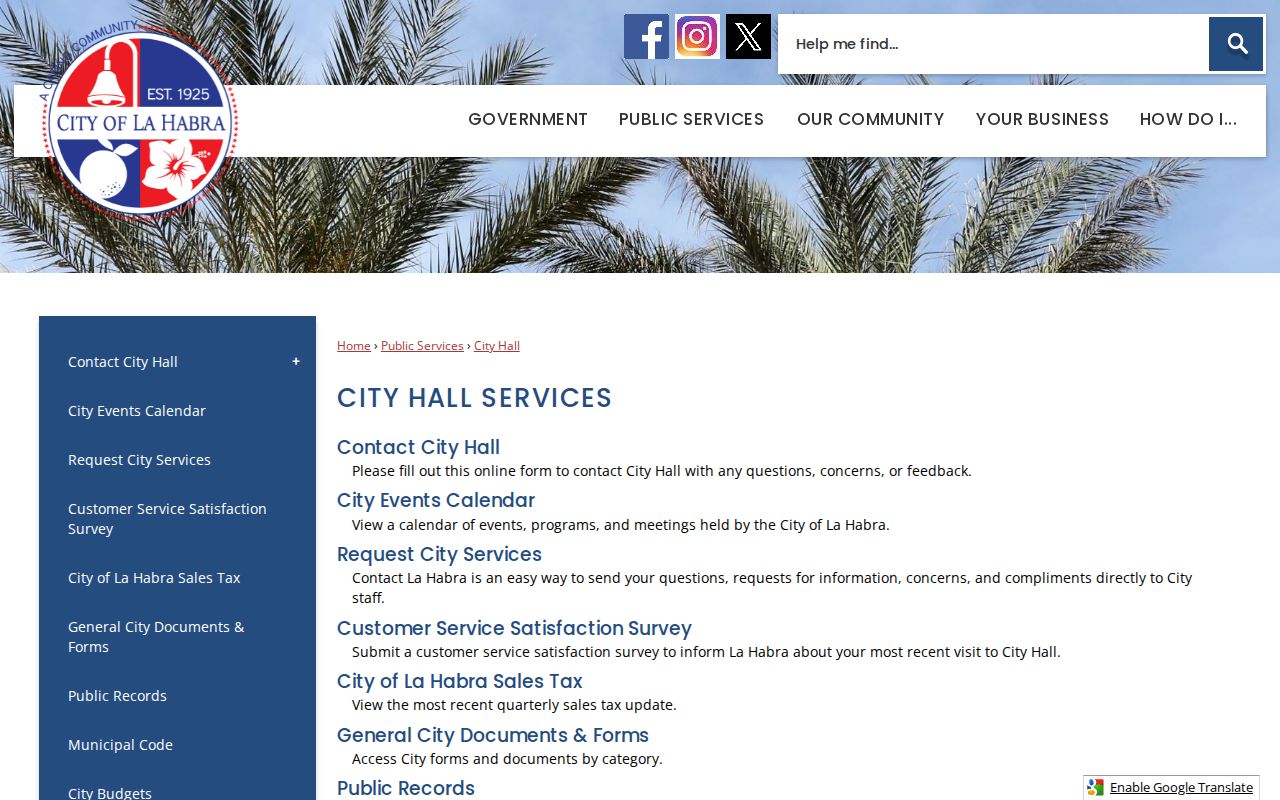
The older the question, the more the details matter. Preserve the original spelling, the legal description, and the record series name exactly as each appears.
La Habra State Records Add Context
State records can back up a name in the La Habra residents directory. They never list who lives where. The Consumer Affairs license search is free. It shows a credential, its status, and key dates. Board documents posted for public view appear there too, and they can carry useful detail. Secretary of State bizfile is another open tool. An entity record there lists formation filings, an agent, and a business address. Neither address proves a home. An agent address is a mailing convenience.
The State Controller's unclaimed-property search takes a name alone. It also accepts an address, city, or property number. A hit can surface an old reported address plus a claim path. The search costs nothing. That old address is a dated clue, though, not proof anyone lives there now. Claim only through official channels, and never pay just to run a search.
These sources work best after the main identity grid exists. A license, entity, or unclaimed-property result should add one dated fact. Weigh it against a parcel, court, or city record.
Privacy Protections Shape La Habra Searches
Blank fields in a La Habra resident lookup are often deliberate, built into California's Safe at Home program. Survivors and covered workers get a substitute mailing address. Agencies generally must accept it. A public record can then contradict a real location. Never chase or publish the actual address.
Voter rolls carry purpose limits too. Federal law restricts DMV address data under the Driver's Privacy Protection Act. Sealed court files, vital-copy rules, police exemptions, and redactions can each strip a name from public view. A commercial opt-out shrinks one site's display, but it cannot erase a deed, case, or tax record held by its lawful custodian.
California Penal Code section 646.9 covers stalking through repeated following or harassment with a credible threat. The safe course is simple. Verify facts with the custodian, copy only what is needed, and stop when the record is protected or the purpose is not lawful.
La Habra History Leaves Resident Clues
La Habra's paper trail follows its geography. It began with Rancho Cañada de La Habra, a 6,698-acre Mexican land grant in 1839. Orange County formed in 1889. The post office name dates to 1896. Pacific Electric trains arrived in 1908. Standard Oil opened the Coyote Hills district and its pipeline in 1912, and oil and citrus workers crowded a "tent city" the next year.
The city incorporated in 1925 with about 3,000 residents. It approached 5,000 people by 1950 and now describes nearly 62,000 across 7.3 square miles. Each era leaves its own evidence. Avocado farms, the Pacific Electric years, packing houses, postwar subdivisions, and cross-border telephone directories each generate different record types. The city gallery captions homes, schools, farms, clubs, Masons, Kiwanis founders, and the city-formation newspaper.
Central Avenue is a practical search trap. That street is now La Habra Boulevard, and the official city history confirms the earlier name without giving an exact rename year. So run both forms through newspapers, directories, maps, and planning files, keeping each name's era and jurisdiction in view. County islands and annexations can shift the custodian too.