
How La Habra Residents Are Found
A useful La Habra residents directory search begins with the key already in hand. A street address points first to a parcel, an assessor number, and a mapped legal description. A full name can lead to a deed party, court index entry, license, business filing, or historical directory listing. An old photograph or obituary may supply the year that makes an archive search work. Each source answers a narrower question than the phrase “who lives here” suggests.
Orange County records are strongest when the search moves from a broad lead to a dated record. Ownership is not the same as occupancy. A court party is not automatically a local resident. A directory entry is a snapshot, while a voter record has its own legal limits. Good resident research keeps the source, date, address type, and level of certainty beside each result.
- Start with the Orange County property search by street number and street name, then save the APN, situs address, and legal description when the record supplies them.
- Use the parcel in OC Public Works GIS to check the lot, tract, adjoining parcels, annexation context, and any associated survey or map.
- Search the Clerk-Recorder Grantor/Grantee Index by the exact party spelling and a recording-date range, remembering that an index result is not the deed image.
- For a person, compare a court, license, business, unclaimed-property, or historical-directory lead with a second independent record.
- When a city file is identifiable but not online, make a narrow California Public Records Act request with the department, address or APN, date range, and desired format.
La Habra Records Offices by Question
La Habra residents appear in different record systems because the custodians serve different purposes. The Orange County Clerk-Recorder handles recorded land instruments and vital-copy services. The Assessor and Tax Collector connect parcels to assessment and tax facts. The Registrar of Voters controls voter information. City Hall keeps local administrative files, while the Superior Court holds case records. A directory search becomes clearer when the office is chosen before the name is entered.
Orange County Clerk-Recorder
601 N. Ross Street
Santa Ana, CA 92701
714-834-2500
Orange County Assessor
Parcel, assessment, and tax search
Street or APN entry is the practical starting key.
Orange County Registrar of Voters
1300 S. Grand Avenue, Building C
Santa Ana, CA 92705
Qualified-file rules apply.
The La Habra City Clerk is a local starting point for agendas, minutes, ordinances, resolutions, contracts, claims, campaign filings, and historic city records. Those files can name a speaker, applicant, vendor, or public official without becoming a household roll.
The City Clerk page supplies the office contact details and hours. Its role matters because a county index cannot answer every city question, and the city cannot certify a county deed. Send a record request to the custodian that created or holds the record.
The City Clerk's office is at 110 E. La Habra Boulevard and can be reached at 562-383-4030. Counter hours are Monday through Thursday, 7:30 a.m. to 6 p.m.; the office is closed Friday.
The official City Clerk source is paired with the image below. It helps separate municipal participation records from a general resident list.
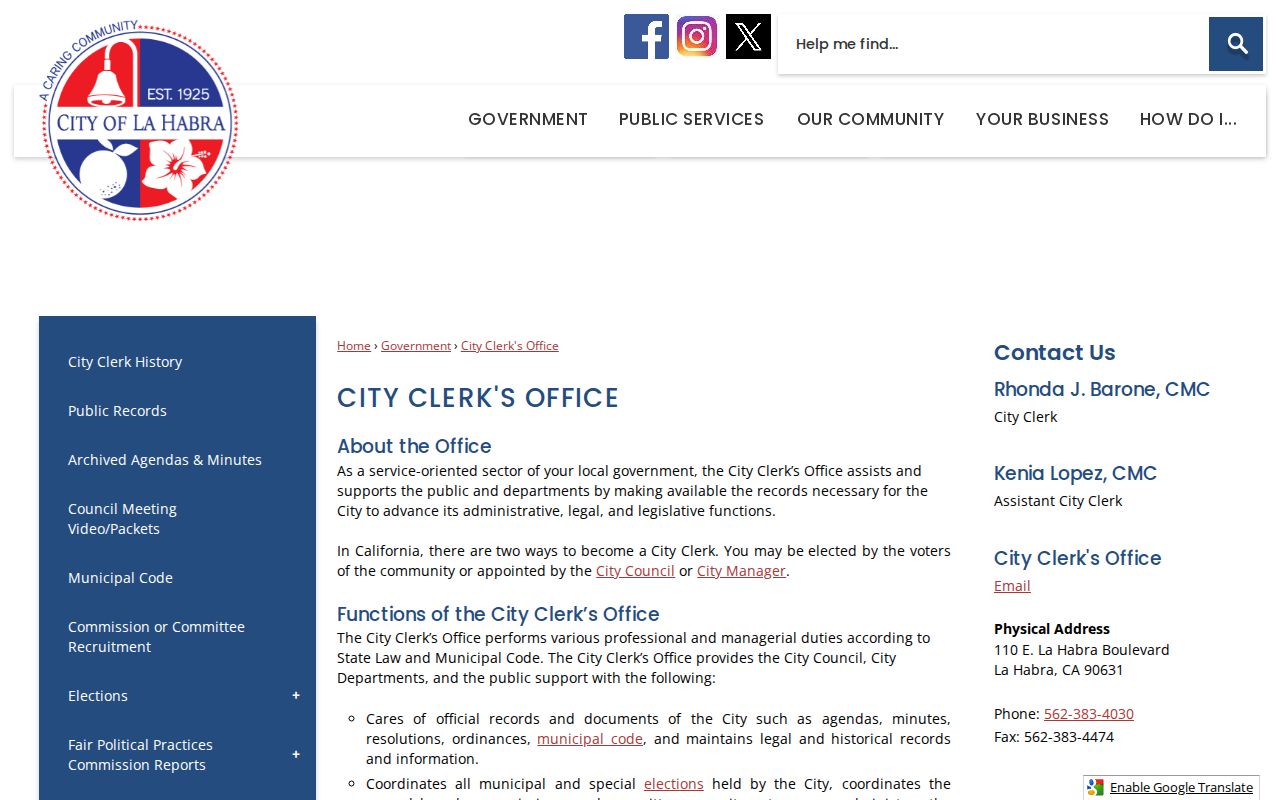
City records can add names and dates around a parcel, but they still require a clear reason for the search and careful treatment of restricted details.
La Habra Resident Records Start Here
The Orange County secured-property search is parcel and address oriented. It can establish the APN, situs, assessment context, and property characteristics that make later records searches more precise. An unrestricted official owner-name search was not located in the verified public web interface. Start with the address or parcel number instead of assuming a surname search will find every local owner.
APN means assessor's parcel number. Situs means the physical location of the parcel. A mailing address is where tax or assessment correspondence goes, and it may belong to an owner, trust, representative, or another place. A result that joins mailing and situs addresses supports an owner-occupancy lead, but it does not prove who lives there.
| APN / parcel number | Text key; preserve leading zeros and hyphens as the interface directs. |
|---|---|
| Street number | Address-mode numeric field; enter the exact number first. |
| Street name | Address-mode text field; try the name without a suffix or direction if needed. |
| Search / Reset | Controls for submitting or clearing a parcel query; results are parcel records, not household rolls. |
The expected parcel record can include APN, situs address, owner name where the law and interface permit, tax mailing address or indicator, legal description, tract-lot data, assessed land and improvement values, tax rate area, use code, exemptions, year built or characteristics, and a map link. Phone numbers and household members are not normal assessment-roll fields.
The Orange County secured-property search is the source for the image below. Its address-first design is why an APN is worth saving before moving to deeds or neighboring parcels.
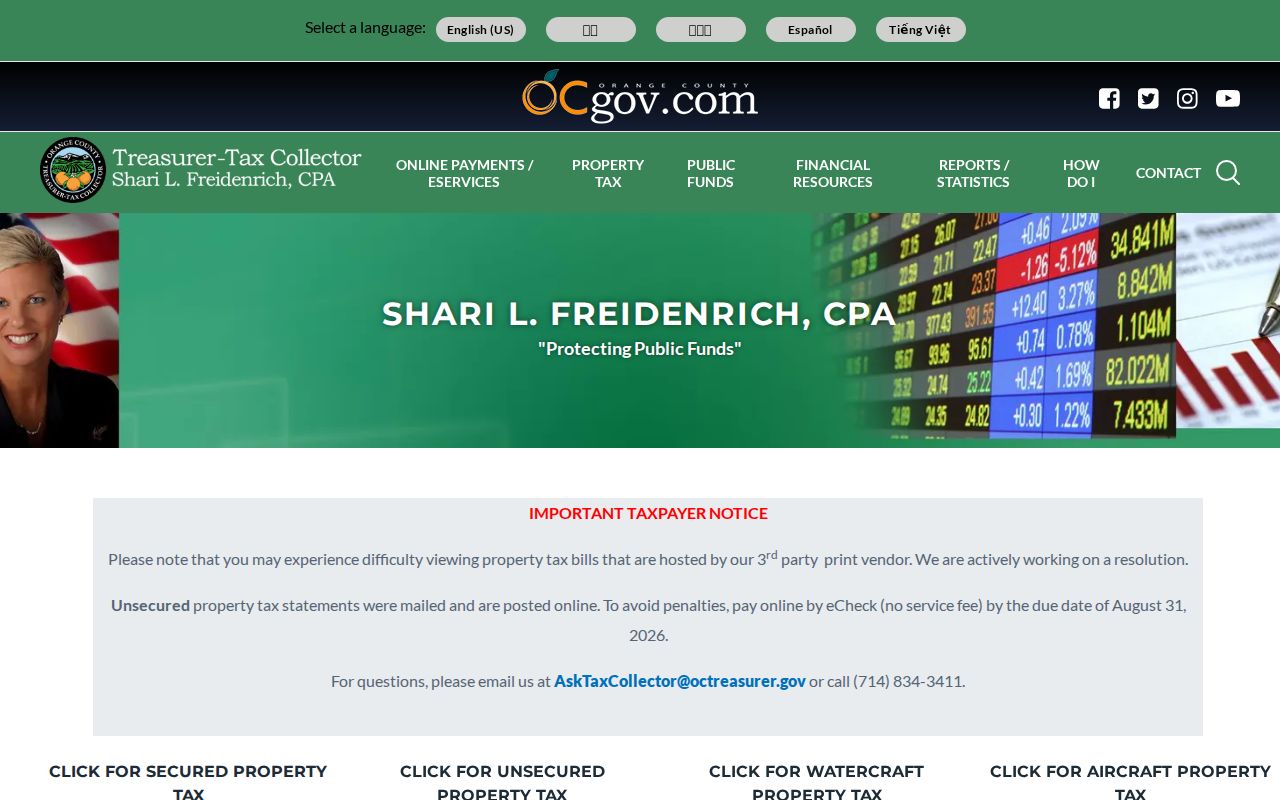
For a street question, carry the APN into GIS. For a person question, treat the owner name as one anchor and seek a second dated record.
La Habra Deed Records Build Trails
The Orange County Grantor/Grantee Index is a name-and-date index to recorded instruments. A grantor is the party transferring an interest; a grantee is the party receiving it. The index can expose party names, recording dates, document type, and document or instrument identifiers. It does not place the full recorded image on the screen. The legal description, vesting language, signatures, and return address belong to the instrument itself.
RecorderWorks provides Search by Name for a person or business, a partial-match option, recording-date fields, Book/Page, Document Type, Index Books, predefined searches, APN, and Legal Description modes. Its verified online dividing line is January 4, 1982. For earlier work, keep book, page, and instrument references and ask the recorder or Orange County Archives about index books, microfiche, or copies.
| Index result field | What it contributes | What it does not prove |
|---|---|---|
| Indexed party and role | Names the grantor or grantee as indexed. | That the party lived at the parcel. |
| Recording date | Places the filing in a county record timeline. | The exact sale or move date. |
| Document type and number | Identifies a deed, lien, release, reconveyance, map, or related instrument. | The instrument's full legal terms. |
| Book, page, or APN reference | Helps retrieve older or parcel-linked material. | A current household list or image access. |
Search each spelling variant and constrain the recording dates. To build a chain, begin with the present parcel, identify the acquisition instrument, note the seller, then search that seller as an earlier grantee. Recorder staff direct patrons to search for themselves and do not perform the name search by phone, mail, or counter.
The free index is different from a copy. Orange County lists a $1 per-page copy charge plus $1 certification for each document or map. Mail requests go to the Clerk-Recorder at 601 N. Ross Street, Santa Ana, with a document number and a self-addressed stamped envelope. The county's property-fraud notice also encourages periodic index review and describes a free automatic courtesy notice for a title-affecting filing.
The Grantor/Grantee Index supplies the image below. It is a useful resident trail because it preserves names tied to a property event, while its limits keep the result from being mistaken for a complete resident directory.
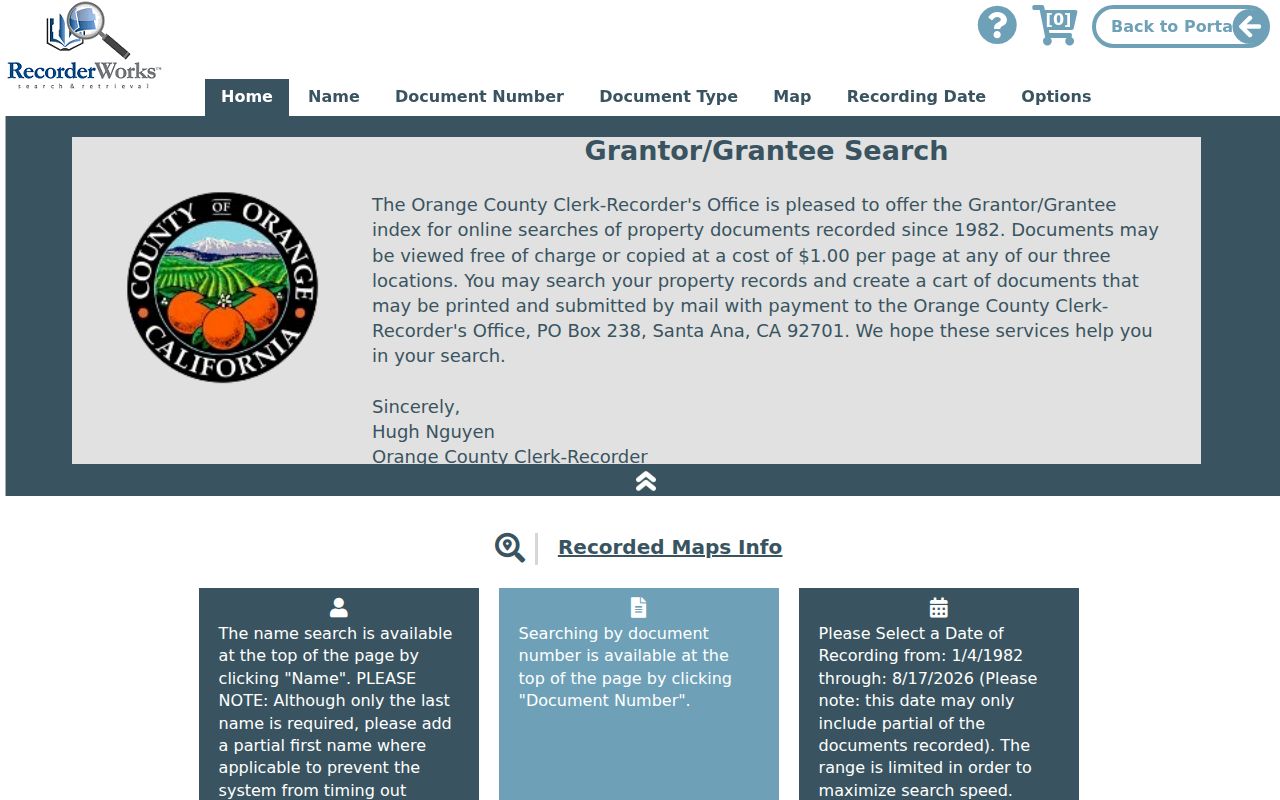
Use the source link, not a surname alone, when a deed trail must be checked or copied.
Current La Habra Resident Records
Current resident-directory work is a set of partial views. Each row below is useful for a different question, and none should be expanded into a claim that every household is listed. The strongest results combine an address key, an identity key, and a date.
| Record source | Who or what appears | Keeper | Access level |
|---|---|---|---|
| Assessment and tax parcel | Parcel, APN, situs, assessment facts, and owner or mailing data where displayed | Orange County Assessor / Tax Collector | Official parcel search and counter channels |
| Recorded instrument index | Parties to deeds, liens, releases, reconveyances, and maps | Orange County Clerk-Recorder | Free index; image or copy is separate |
| Voter status | One voter's registration and election information | California Secretary of State | Self lookup; qualified file rules |
| City administrative file | Applicants, owners, contractors, speakers, or project contacts where disclosable | City of La Habra | Archive search or narrow records request |
| Historical directory or census | Listed occupants or households in a stated year | Libraries, archives, NARA, and partners | Collection-specific and incomplete |
A name search becomes more reliable when the question shifts from “is this the person?” to “which record role fits?” A parcel owner is evidence of title. A directory subscriber is evidence of a listing. A court party is evidence of a case connection. When a name needs modern confirmation, use the La Habra resident lookup workflow and keep the source roles distinct.
La Habra City Records Add Clues
City Hall can add context that county portals do not hold. La Habra planning and building files may identify an applicant, owner, architect, contractor, project address, construction work, or change of use. Code Enforcement handles visible property and land-use concerns, yet its public page is a report channel rather than an open name-and-case index. Police records are controlled by role, privacy, and investigative rules.
The free La Habra Archive Center has Keywords, Archive, Time Period, Date Range Start, and Date Range End fields. Advanced Search adds “Search Agendas by.” Search budgets, water reports, action plans, meeting material, ordinances, and resolutions by subject and date. The absence of a file online does not establish that the Clerk lacks it.
The public-records fallback is a narrow request through City Hall. Name the department, address or APN, project or case number, date range, and desired electronic format. Under the CPRA, the city normally makes an initial determination within 10 calendar days and may use a written 14-day extension for unusual circumstances. That is a response deadline, not a promise that every page will be produced at once.
The City Archive Center is shown below. Its controls are useful when a person appears in a meeting record or a parcel appears in a project file.
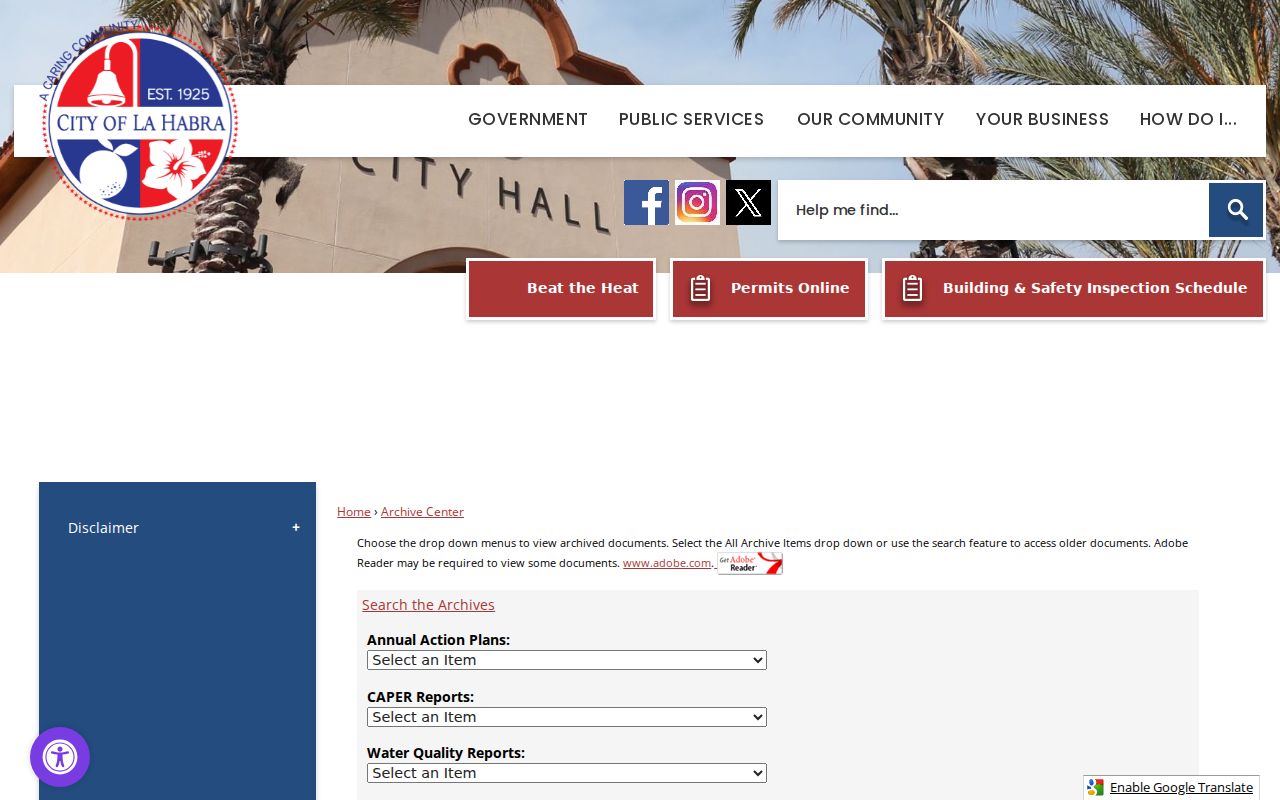
Request inspection when many pages are involved. Ask for redacted, disclosable records rather than expecting complainant or active-investigation details.
La Habra Ownership Records Need Care
La Habra property data is valuable because it ties a person or entity to a parcel. It is also easy to overread. A tax mailing address may be elsewhere. A trust or representative may appear. People who use a home without holding title may not appear in the assessment roll at all. The situs address identifies land, not every person connected to it.
The same distinction applies to a deed. A recorded party has a legal role in an instrument. That role may be a transfer, lien, release, or reconveyance. It is not a time-stamped statement that the party occupied the home. A resident directory built from official records should label each lead by its record type.
- Assessor parcel: a strong address and title anchor. It connects an owner or parcel fact to land, not a full household.
- Recorder index: a strong transaction anchor. It connects parties to a recorded event and date.
- Historical directory: a useful year snapshot. It connects a listed subscriber or occupant to a volume's stated coverage.
- Commercial people-search output: a lead only. It may merge names or retain stale data, so verify at the custodian.
This is the main difference between an official records path and a commercial compilation. Official records expose the custodian, search fields, date, and limits. A compilation may be faster, but its source mix and update trail can be unclear. Personal research benefits from the slower record path because each fact can be checked.
La Habra Voter Records Stay Limited
California My Voter Status is a self-verification tool, not a public street directory. The current form asks for the registration facts it needs, which may include name, birth date, California identification details, county, or address facts. A match can show registration status, party preference, districts, polling or vote-center information, and ballot information. It does not show ballot choices.
Orange County voter-registration data is not general public data. Elections Code section 2194 and 2 CCR sections 19001 through 19012 limit the purposes, applicants, security steps, and products available through a qualified request. The county requires a qualified individual or organization, a wet original signature, payment, supporting documentation, and a permitted-use description. A specific-voter request cannot be turned into a list of unidentified people on a street.
- Self lookup: verifies the requester's own status, districts, and election details through the state portal.
- Qualified file: requires an eligible purpose, application, signature, supporting material, payment, and storage controls.
- Protected fields: identification numbers, signature data, and Safe at Home addresses are not ordinary directory fields.
- Participation history: may indicate a voting event, never the selections made on a ballot.
The California My Voter Status portal is shown below. Treat a self-lookup result as a confirmation for the person who requested it, not as permission to publish a neighbor list.
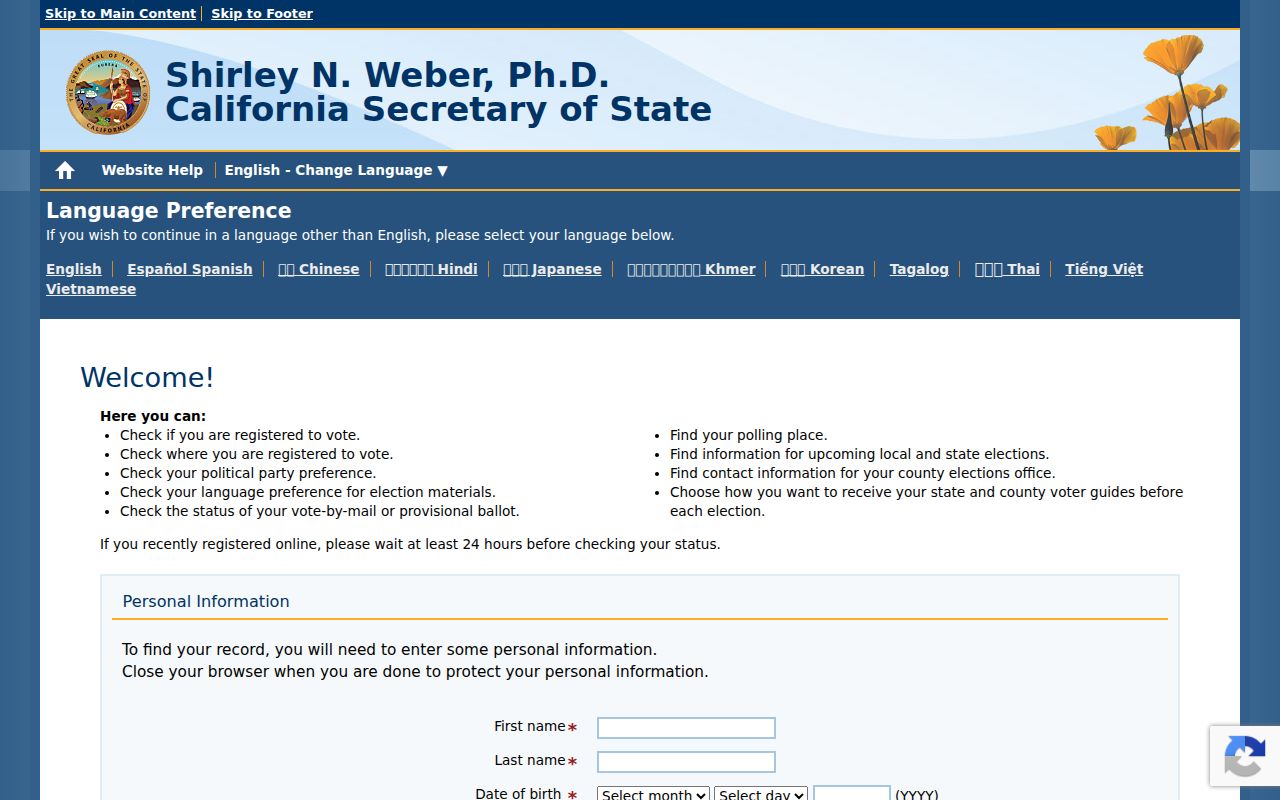
Election geography can help explain a district or precinct. It does not make the names inside that geography public.
La Habra Names Need Two Matches
A same-name result should remain a candidate until two independent facts connect it to the question. A middle initial, spouse or associate, age range, address, APN, court location, business, or date can separate two people with similar names. Use the record's own role and wording instead of smoothing different sources into one story.
For a name-to-address search, start with a professional license, business filing, court index, or historic directory only when that source fits the question. Then compare with a parcel, deed, or dated city file. For an old address, keep the address type beside the date. Mailing address, situs address, legal description, and directory address are not interchangeable.
- Roll
- A recurring list maintained for a defined purpose, such as assessment or registration. It is not automatically a household list.
- Index
- A finding aid that points to a record by name, date, number, or parcel. An index may omit the document image.
- Parcel
- A mapped unit of land tracked by an APN. The parcel is the geographic key behind many Orange County searches.
- Criss-cross directory
- A reverse arrangement that starts with a street and number rather than a person's name. Each volume's key must be checked.
La Habra Court Records Split the Trail
The Orange County Superior Court Online Case Access portal is a party and case index. Search paths vary by civil, criminal, family, probate, and related categories. Name fields, case number, filing-date range, and search controls may appear together, while CAPTCHA or category notices can affect the path. North Justice Center serves many northern Orange County matters, and Lamoreaux Justice Center handles family-law matters. Federal cases belong in PACER, not the county index.
Vital records use a different access system. Orange County and the California Department of Public Health issue copies for Orange County events, while divorce decrees come from Superior Court. Health and Safety Code sections 103525 and 103526 distinguish authorized certified copies from informational certified copies. An authorized copy can establish identity for an eligible applicant; an informational copy is marked not valid to establish identity. Mailed authorized requests generally need a notarized sworn statement.
There is no verified free modern statewide vital-name roll. Historical marriage and genealogy collections can expose parties, parents, witnesses, residences, or event facts, but a genealogy image or index is not a certified copy. Match a court or vital lead to the question, then use the proper custodian and application path.
Historical La Habra Directory Shelves
Historical residents require a different La Habra residents directory strategy. NARA's circa-1930 holdings table verifies multi-city Orange County directories that include La Habra for 1926 and 1929. Later catalog entries place La Habra inside GTE “Whittier and nearby cities” titles and Pacific Bell “Orange County North” address and phone portions. The border geography matters: a La Habra search may fail when the catalog is queried only for the city name.
The verified GTE runs include 1988 through 1993 entries with January, May, and July issues, while the Pacific Bell holdings include 1988 through 1994 issues. A catalog row contains an obvious “Jul 1888” typo among 1988 material; it should remain a catalog typo, not become a claimed 1888 volume. Whittier white and yellow pages extend into 2003 to 2010, but listed subscriber and business context is not full household coverage.
La Habra Library is closed for building improvements during an approximately 24-month renovation that began in May 2025, with spring 2027 reopening planned. Brea Library, mobile stops, OCPL reference service, Orange County Archives, NARA, and the Orange County FamilySearch Center are practical interim paths. Call before travel because local shelf access changes while the branch is closed.
The Orange County Archives provides the archival view shown below. It is especially useful for pre-1960 directories, newspapers, photographs, property series, and county government material.
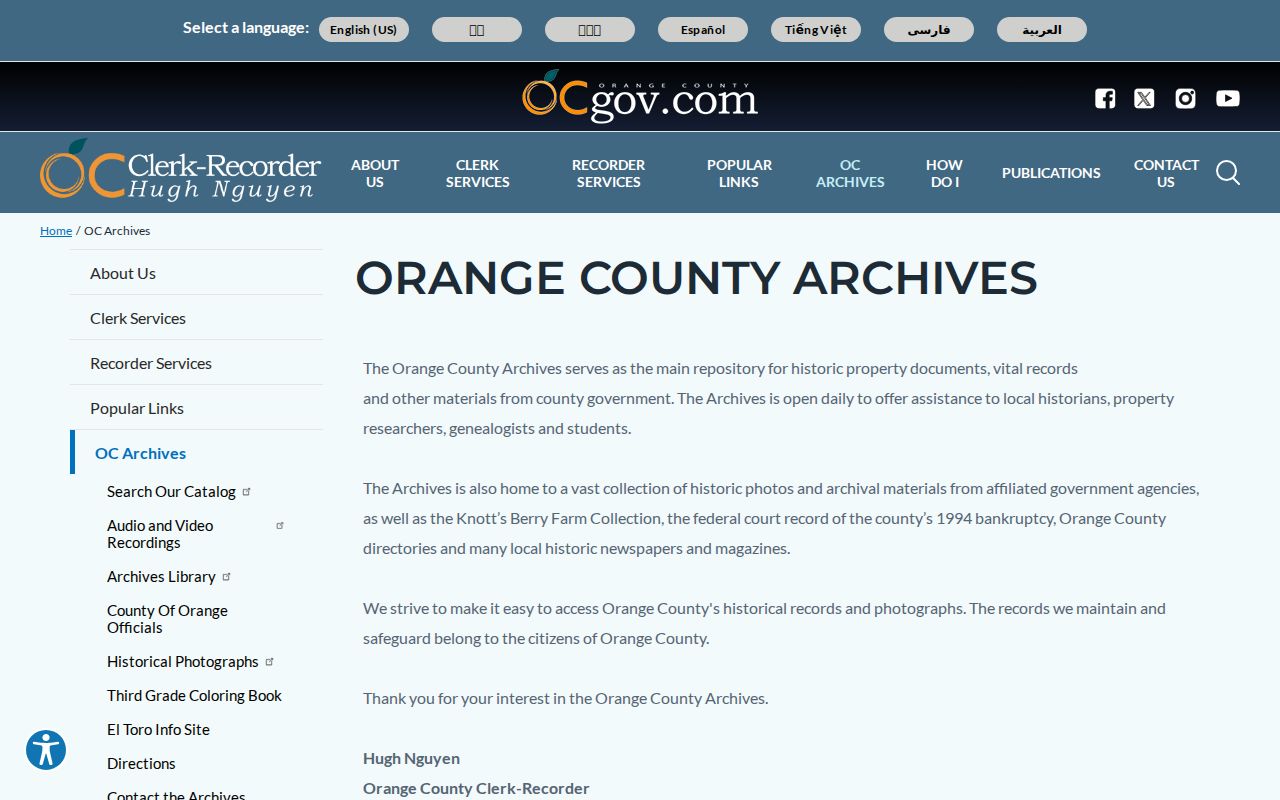
For exact year runs and how entries are arranged, use the La Habra city directory collections reference rather than assuming every old volume has a reverse section.
La Habra's Records Have a 1982 Divide
Orange County records reach back farther than the modern web interface. The Clerk-Recorder preserved 640 original property-deed volumes from 1889 through 1926 and 210 property-index volumes from 1889 through 1953. Deacidification, Mylar sleeving, fireproof rebinding, and microfilm work show why an archive or counter request can succeed after an online search stops.
RecorderWorks uses January 4, 1982 as its verified online dividing line. Before that point, a researcher may need book, page, instrument, index-book, or microfiche references. Orange County Archives was established in 1983 and preserves more than a century of county material. The recorder remains the custodian of official recorded instruments, while Archives can supply older maps, assessments, and administrative series.
Municipal history has its own boundary. La Habra incorporated on January 20, 1925, so records from before incorporation cannot be City of La Habra records. County, land-grant, church, newspaper, and federal sources carry the earlier story. Keep that jurisdiction line in mind when an old name or address appears.
The City Hall public-records hub is shown below. It connects municipal services, the request route, budgets, forms, and the city archive.
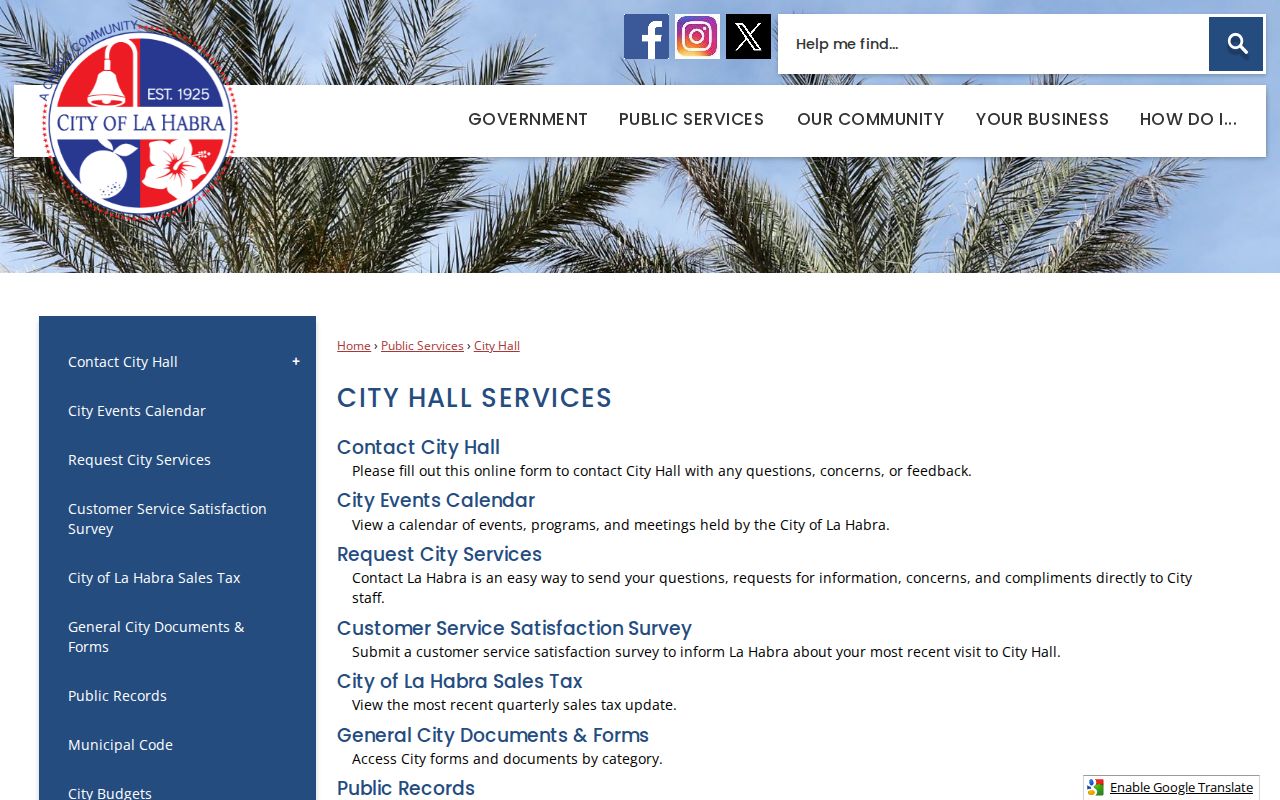
The older the question, the more important it becomes to preserve the original spelling, legal description, and record series name.
La Habra State Records Add Context
State systems can corroborate a La Habra identity without becoming a resident list. The Department of Consumer Affairs license search can show a credential, status, dates, and board-provided public documents. Secretary of State bizfile can show a business entity, formation or filing history, agent, and business address. An agent address or business address is not proof of a home address.
The State Controller unclaimed-property search accepts a name and optional address, city, or property number. A result can preserve an older reported address and a claim path. It is free, but an old reported address is a historical clue rather than current-residence proof. Use official claim channels and do not pay merely to search.
These sources are most useful after the main identity grid exists. A license, entity, or unclaimed-property result should add one dated fact, then be compared with a parcel, court, directory, or city record.
Privacy Protections Shape La Habra Searches
Some missing fields are missing by design. California's Safe at Home program gives qualifying survivors and specified workers a substitute mailing address that agencies generally must accept. A protected address can create an apparent conflict between a public record and a real location. Do not try to resolve or publish the actual address.
Voter records have purpose limits. DMV address data is restricted under the federal Driver's Privacy Protection Act. Court sealing, vital-copy eligibility, police exemptions, and redactions can all remove a name or address from a search. A commercial opt-out may reduce a compilation's display, but it does not erase a deed, case, or tax record held by its lawful custodian.
California Penal Code section 646.9 addresses stalking involving repeated following or harassment and a credible threat. The safe course is to verify facts with the custodian, limit what is copied, and stop when the record is protected or the purpose is not lawful.
La Habra History Leaves Resident Clues
La Habra's record trail follows its geography. Rancho Cañada de La Habra began as a 6,698-acre Mexican land grant in 1839. Orange County formed in 1889. The community and post office name date to 1896. Pacific Electric service arrived in 1908, Standard Oil established the Coyote Hills district and pipeline in 1912, and oil and citrus workers formed a 1913 “tent city.”
The city incorporated with about 3,000 residents in 1925, approached 5,000 by 1950, and now describes nearly 62,000 people in 7.3 square miles. Avocado farming, the Pacific Electric era, packing houses, postwar subdivisions, and cross-border telephone directories each leave different kinds of evidence. The city gallery captions homes, schools, farms, clubs, Masons, Kiwanis founders, and the city-formation newspaper.
Central Avenue, now La Habra Boulevard, is a practical search trap. The official city history confirms the earlier name but not an exact rename year, so both forms belong in a newspaper, directory, map, and planning search. County-island and annexation history can also shift the custodian. A name or address becomes more useful when its era and jurisdiction are kept in view.