
La Habra City Directory Shelf
The strongest verified collections do not form one continuous La Habra-only run. They sit in federal, library, archive, and local-history channels. The coverage table separates a directory from a census or photograph file, and it keeps a catalog description from becoming a claim that every La Habra household appears.
| Collection | Years | Where Held | Access |
|---|---|---|---|
| Multi-city Orange County directory including La Habra | 1926 and 1929 | NARA microfilm and the official circa-1930 holdings table | Verify the volume and request research or microfilm access |
| GTE, Whittier and nearby cities | Jan/May/Jul 1988; Jul 1989; Jan/Jul 1990; Jan/Jul 1992; Jan 1993 | LA County Library Californiana inventory | In person; check arrangement in each volume |
| Pacific Bell, Orange County North | May 1988; Feb/May 1990; May/Nov 1991; May 1992; Feb 1993; May 1994 | LA County Library Californiana inventory | In person; listed address and telephone portions |
| Whittier white and yellow pages | 2003-04 through 2009-10 | LA County Library Californiana | Later subscriber and business context |
| La Habra historic photo file and gallery | 1890s through mid-20th century captions | City gallery, library projects, and Historical Society work | Local names and scenes; not an indexed directory |
| Federal population census | 1790-1950 released; later years follow the 72-year rule | NARA and partner genealogy databases | Household and address evidence by census year |
No official finding aid verified a La Habra-specific Polk run, a complete reverse section in any listed volume, or a continuous year-by-year series. No exact Sanborn year list or copyright-safe digitized La Habra entry page was located. Those gaps matter more than a neat but unsupported sample.
La Habra NARA Directory Years
The National Archives circa-1930 directory table verifies La Habra inside a multi-city Orange County volume for 1926 and again for 1929. That is a meaningful early lead because La Habra incorporated in 1925, but it is not evidence of a La Habra-only book or a complete list of residents. The volume's own title page, arrangement, and page-level conventions must be checked before describing what a particular entry contains.
The NARA city-directory holdings table is the right place to confirm the year and multi-city coverage. A researcher can then ask NARA Riverside, a partner genealogy library, or an archive about the relevant microfilm route.
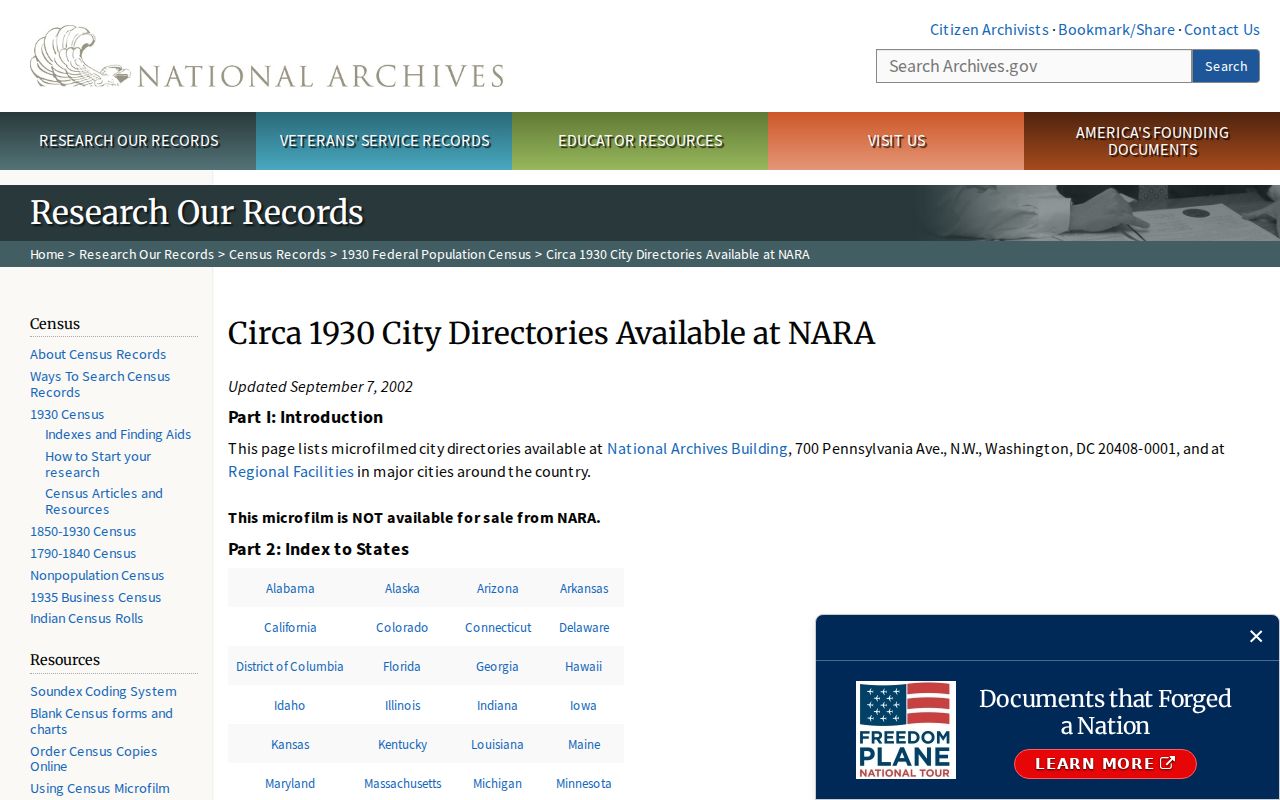
The NARA gateway establishes that the two years exist in the official directory map. It does not replace inspection of the volume or create a modern resident list.
The broader National Archives census research gateway explains the related federal schedules and release rules used beside directory evidence.
The census gateway is a companion source, not a substitute for the directory volume or its stated coverage.
La Habra Telephone Directory Runs
Later La Habra city directory research depends on broad telephone titles. The LA County Library Californiana inventory lists GTE volumes under “Whittier and nearby cities” from 1988 through January 1993 on the specific month schedule in the table above. It also lists Pacific Bell address and telephone portions under “Orange County North” from May 1988 through May 1994. Those labels are the clue: a La Habra search may fail if the catalog is searched only for the city name.
One catalog row contains an obvious “Jul 1888” reading among 1988 entries. Preserve that as a catalog typo, not as proof that an 1888 telephone book exists. Confirm the title page and publication date in the physical volume. The inventory also lists later Whittier white and yellow pages through 2009-10, but those are listed-subscriber and business context, not a full household census.
The directory runs were verified as holdings information, not as an open digitized page set. Ask LA County Library Californiana staff how each volume is arranged, whether it has a reverse section, and which nearby-city labels include the address being traced.
La Habra Directory Labels and Whittier
La Habra sits at Orange County's northern edge, so historical catalog geography can follow a telephone exchange, a regional service area, or a library's own shelf label rather than a city limit. “Whittier and nearby cities” and “Orange County North” are therefore useful search terms. They do not prove that every edition includes every street, or that every name was listed.
Before treating a name or address as a match, record the volume title, publisher, exact year, page section, and the volume's abbreviation or arrangement key. A reverse or criss-cross section must be confirmed from the volume itself. For current parcel work, the separate La Habra by-street record chain supplies the APN, map, deed, and city-file checks that a historical telephone title cannot provide.
La Habra City Directory History Clues
The city's gallery is a local-history companion to the city directory shelf. Its captions cover the La Habra branch library from 1920-1938, the Luehm residence from 1897, the Pacific Electric era, packing houses, La Habra School, civic clubs, Central Avenue, and the newspaper associated with city formation in 1925. A caption can supply a name, building, or street clue for a later directory search, but it is not a page-by-page index.
The La Habra historic gallery is the source for the dated local images and captions.
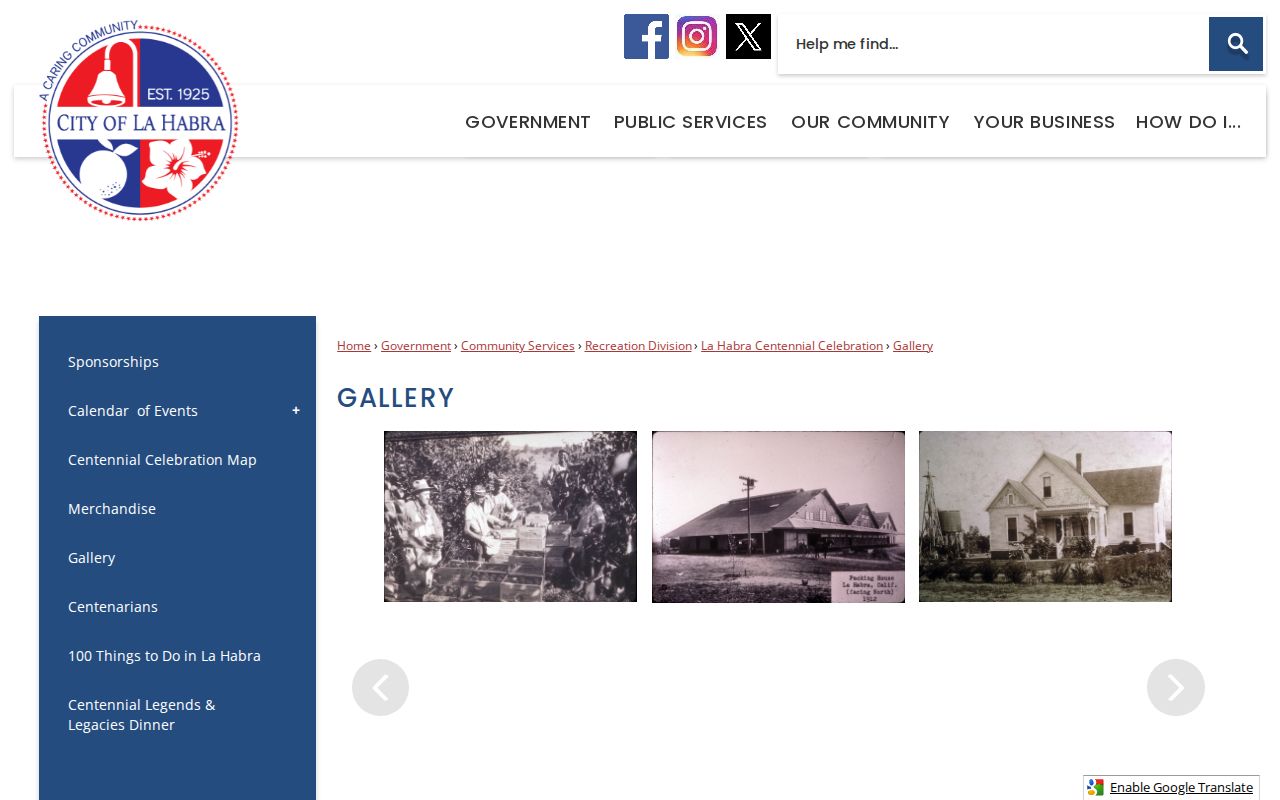
Gallery evidence is strongest when its caption is paired with a newspaper, census entry, deed, or directory year. It adds local context without pretending to be a household roll.
The city's official La Habra history page supplies the broader settlement and incorporation timeline.
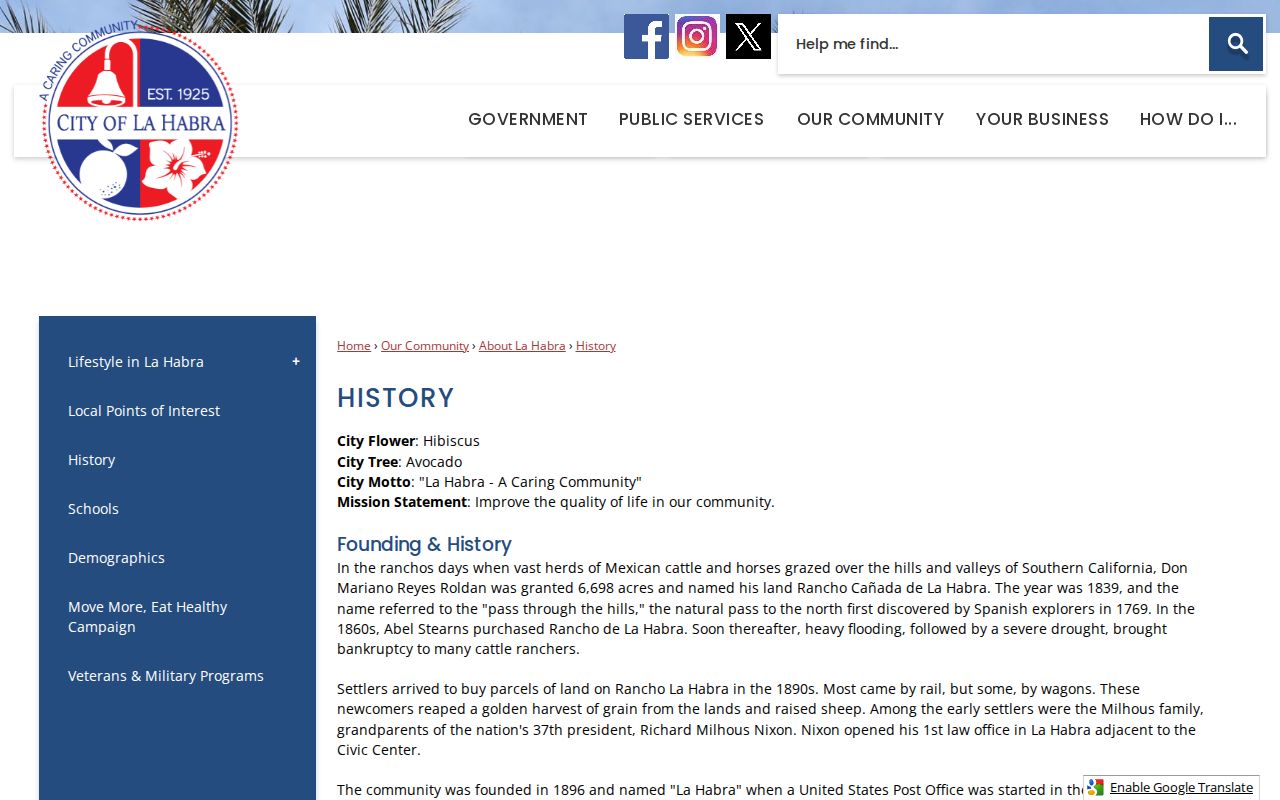
The history source explains why names from ranch, rail, oil, citrus, and postwar eras may surface in different record families.
Reading a La Habra Directory Entry
An actual entry should be copied only after the volume's title page and abbreviation key have been checked. No copyright-safe La Habra sample page from an authoritative digitized collection was located during research. The inventory below is therefore a capture checklist, not an invented example.
Record the volume title, publisher, place coverage, and publication year before copying a name. Then preserve the exact spelling, street line, symbols, and cross-reference. A directory entry is a dated listing shaped by the publisher's rules, so its omissions and abbreviations need the same care as its visible details.
| Volume heading | City or regional coverage, publisher, publication year, and the information date if stated. |
|---|---|
| Name line | Listed person or subscriber, including initials, spelling, and any cross-reference. |
| Household notation | Spouse or family notation when the volume uses it, copied with the publisher's punctuation. |
| Street and number | House number, street text, direction, and any “r” or “b” abbreviation after the key confirms its meaning. |
| Owner or renter mark | A symbol or letter only when the volume's own key defines it. |
| Telephone and cross-reference | Subscriber number, street-order reference, vacant note, or new-house note if actually printed. |
- Criss-cross section
- The street-order part of a volume, if present, where a street and number may lead to a listed subscriber.
- Householder index
- A name-order index to people listed as householders or subscribers, subject to that volume's coverage.
- Abbreviation key
- The page or front matter that defines symbols and short forms. Photograph or transcribe it before interpreting an entry.
Tracing Families Through La Habra City Directories
Directory-to-census work is a dated comparison, not a single search. Start with the closest verified year, copy the name and address exactly, and then move through the next available edition. Pair the released 1940 and 1950 census schedules with directory evidence where the address and household facts can be reconciled. The 1950 census is the newest presently open census under the 72-year release rule.
- Anchor the first name or address to a year and source.
- Follow each available edition, noting a move, spelling change, or changed street name.
- Check a reverse section only when the volume's own key confirms it.
- Pair the directory snapshot with the nearest released census and record the gaps.
- Use newspapers, obituaries, probate, cemetery records, yearbooks, or photographs to test whether a disappearance reflects a move, death, missed canvass, or publication boundary.
La Habra's 1896 community name, 1908 Pacific Electric service, 1913 oil and citrus worker influx, 1916 newspaper era, 1925 incorporation, and postwar growth are useful date anchors. They tell a researcher when to change source families, not what an unlocated volume must contain.
Record-keeping timeline. The land grant dates to 1839, Orange County formed in 1889, La Habra's post office name dates to 1896, the city incorporated on January 20, 1925, the verified NARA directory years are 1926 and 1929, and the later telephone holdings run from 1988 into 2009-10.
La Habra Directory Library Fallbacks
The La Habra Library branch is closed for improvements beginning in May 2025, with an official reopening plan for spring 2027. Confirm access before traveling. OCPL reference staff, Brea Library, mobile stops, the Orange County Archives, NARA Riverside, and the Orange County FamilySearch Center are the documented alternatives for local-history and genealogy questions.
The branch contact information in the research is 714-526-7728 or 562-694-0078, with ocpl.lahabra@occr.ocgov.com. Ask for a title search using La Habra, Fullerton, Whittier, Orange County North, and nearby-city terms. The response should distinguish a catalog record from a volume that staff have physically inspected.
The OCPL La Habra branch page carries the current closure and service information. Library status can change before a planned visit.
Verified Gaps in La Habra Directories
The evidence supports 1926 and 1929 NARA coverage, the listed GTE and Pacific Bell runs, the Whittier later volumes, and the local gallery. It does not support a named Polk run, a complete reverse-directory sequence, an official La Habra Sanborn year list, or an actual digitized sample entry. The Library of Congress Sanborn collection should therefore be described as a place to check, not as proof that La Habra sheets exist.
Disclosing those gaps protects a family-history search from false precision. Request the title page, coverage statement, arrangement key, and page reference before turning a catalog line into a resident claim.